1 Introduction: Air Fryer vs. Oven
If you've ever wondered whether an air fryer can replace your oven—or which appliance is better for certain foods—you're not alone. Both the air fryer and conventional oven use hot air to cook food, but they do so in fundamentally different ways that affect everything from cooking time to energy consumption to the final taste and texture of your dishes.
Air fryers have exploded in popularity over the past few years, with millions of households adding this countertop appliance to their kitchens. Meanwhile, the conventional oven remains a kitchen staple that's been perfected over centuries. Understanding the strengths and limitations of each will help you become a more efficient and effective cook.
In this comprehensive guide, we'll break down exactly how each appliance works, compare them across multiple factors that matter to home cooks, and help you determine when to reach for your air fryer versus when to fire up the oven. Whether you're cooking for one or feeding a crowd, making a quick weeknight dinner or preparing a holiday feast, you'll know exactly which tool is right for the job.
2 How Each Appliance Works
Understanding the mechanics behind each appliance reveals why they produce such different results, even though both use hot air to cook food.
How a Conventional Oven Works
A conventional oven uses one or more heating elements—typically located at the bottom for baking and at the top for broiling—to heat the air inside a large, enclosed cooking chamber. This heated air surrounds your food and cooks it through radiant and ambient heat transfer.
The cooking chamber in a standard oven ranges from 4 to 6 cubic feet, which means it takes considerable energy and time to heat all that air. Once heated, the air remains relatively static unless you have a convection oven, which adds a fan to circulate the hot air for more even cooking.
Key characteristics of conventional oven cooking:
- Large cooking capacity for big batches, roasts, and multiple dishes
- Even, gentle heat distribution ideal for baking
- Longer preheating time (10-15 minutes typically)
- Static air in standard ovens; circulating air in convection ovens
- Consistent temperatures throughout the cooking process
How an Air Fryer Works
An air fryer is essentially a compact, high-powered convection appliance. It features a heating element at the top and an extremely powerful fan that rapidly circulates superheated air around food in a small, enclosed basket. This creates a vortex of hot air that cooks food quickly and intensely from all angles.
The cooking chamber in an air fryer is typically just 2-8 quarts—a fraction of an oven's size. This compact space, combined with the powerful fan, means the hot air moves much faster and more intensely around your food, creating the crispy exterior that air fryers are famous for.
Key characteristics of air fryer cooking:
- Compact size heats up quickly (2-3 minutes)
- Intense, rapid air circulation creates crispy results
- Limited capacity—best for small to medium portions
- Concentrated heat requires attention to prevent burning
- Food sits in a perforated basket allowing 360-degree airflow
The Fundamental Difference
While both appliances cook with hot air, the key difference is intensity and speed. An air fryer concentrates heat in a small space with aggressive air circulation, creating rapid browning and crisping. An oven distributes heat gently over a large area, ideal for even cooking of larger items or delicate baked goods.
Think of it this way: an air fryer is like a focused, powerful hair dryer blasting your food with hot air, while an oven is like a warm room that gently surrounds your food with heat.
3 Cooking Time Comparison
One of the most significant differences between air fryers and ovens is cooking time. Air fryers consistently cook food faster—sometimes dramatically so.
Why Air Fryers Cook Faster
Three factors contribute to the air fryer's speed advantage:
- Faster preheating: Air fryers reach cooking temperature in 2-3 minutes versus 10-15 minutes for most ovens
- Smaller cooking chamber: Less air to heat means faster temperature recovery when you add food
- Intense air circulation: The powerful fan transfers heat to food more efficiently
Cooking Time Comparison Chart
Here's how common foods compare when cooked in each appliance:
Note: Times shown are cooking time only, not including preheating. When you factor in the oven's 10-15 minute preheat versus the air fryer's 2-3 minutes, the total time difference becomes even more significant.
When Oven Time Works in Your Favor
Despite being slower, oven cooking times can be advantageous when:
- Batch cooking: Cooking a large quantity at once may be faster in the oven than multiple air fryer batches
- Hands-off cooking: Longer oven times mean less active monitoring needed
- Slow roasting: Some dishes benefit from longer, gentler cooking (e.g., roast chicken)
- Baking: Delicate items like cakes need slower, more controlled heat
4 Energy Consumption and Efficiency
With energy costs rising, many home cooks want to know which appliance is more economical to run. The answer is clear: air fryers are significantly more energy-efficient for most cooking tasks.
Power Usage Comparison
Here's how the two appliances compare in terms of energy consumption:
Conventional Oven:
- Electric ovens typically use 2,000-5,000 watts
- Average cooking session: 3-5 kWh
- Heats a large space that isn't always fully utilized
- Long preheat time consumes energy before cooking begins
Air Fryer:
- Air fryers typically use 800-1,800 watts
- Average cooking session: 0.5-1.5 kWh
- Compact design heats only the space needed
- Rapid preheating means less wasted energy
Real-World Energy Savings
Let's look at a practical example. Cooking a batch of chicken wings:
In the oven:
- 15 min preheat at 3,000W = 0.75 kWh
- 45 min cooking at 3,000W = 2.25 kWh
- Total: 3 kWh
In the air fryer:
- 3 min preheat at 1,500W = 0.075 kWh
- 25 min cooking at 1,500W = 0.625 kWh
- Total: 0.7 kWh
That's roughly 75% less energy for the same dish. Over a year of regular cooking, this adds up to meaningful savings on your electricity bill.
Additional Efficiency Benefits of Air Fryers
- Less kitchen heat: Your home's AC doesn't have to work as hard in summer
- Faster cooking: Less time running means less energy consumed
- No preheating waste: Many air fryer foods can start in a cold appliance
- Right-sized cooking: You're not heating 5 cubic feet to cook 1 pound of food
When the Oven Is More Efficient
Despite higher wattage, ovens can be more efficient when:
- Cooking large quantities that would require multiple air fryer batches
- Cooking multiple dishes simultaneously using different racks
- Baking multiple trays of cookies or other batch items
- The oven is already on for another dish
5 Taste and Texture Differences
Perhaps the most important comparison for home cooks: how does the food actually taste? Both appliances can produce delicious results, but they excel at different things.
Air Fryer Texture Characteristics
Air fryers are champions of crispiness. The intense, rapid air circulation creates exceptional results for:
- Crispy exteriors: Foods develop a satisfying crunch similar to deep-frying
- Browned surfaces: Excellent Maillard reaction for golden, caramelized flavors
- Rendered fat: Chicken skin becomes incredibly crispy as fat renders out
- Dehydration effect: Surface moisture evaporates quickly, preventing sogginess
Foods that taste best in an air fryer:
- Chicken wings with crispy skin
- French fries and other potato dishes
- Breaded and coated foods
- Bacon (perfectly crispy every time)
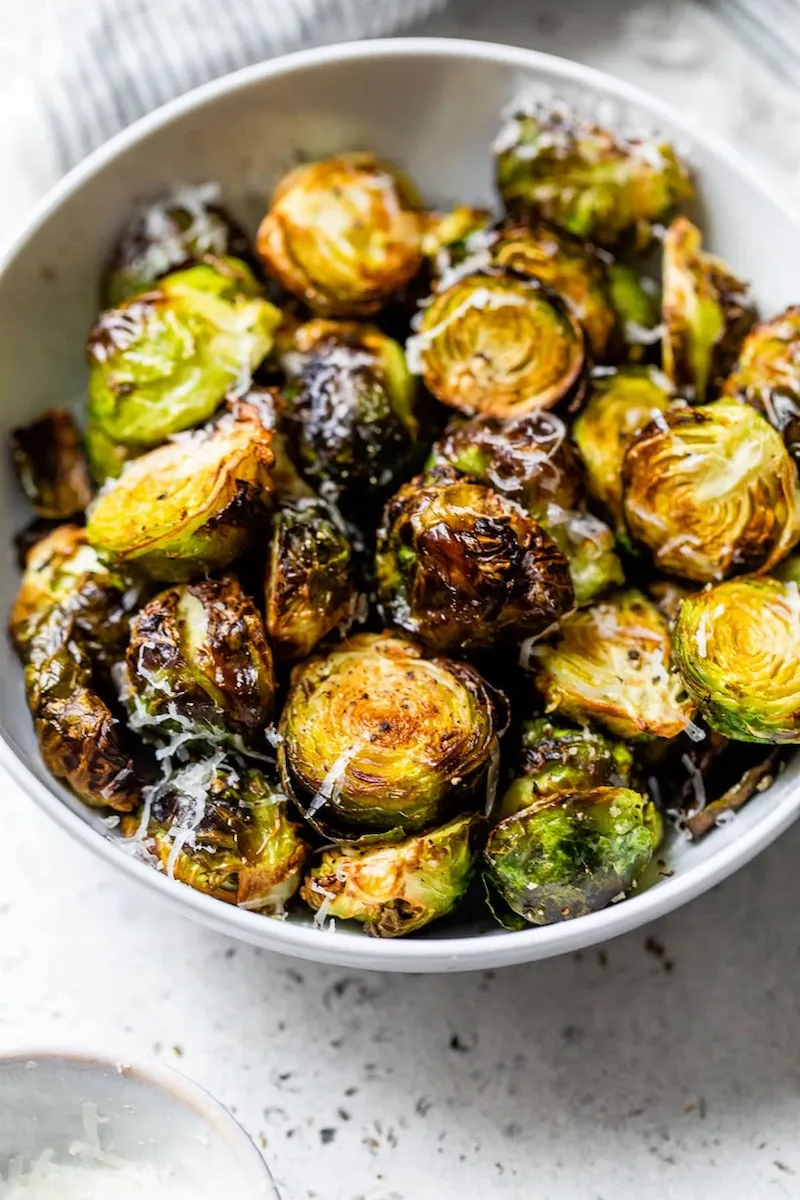
- Vegetables that benefit from charring (Brussels sprouts, broccoli)
- Reheated leftovers (restores crispiness that microwaves destroy)
Oven Texture Characteristics
Ovens provide gentler, more even cooking that's ideal for:
- Tender interiors: Slower cooking allows proteins to cook evenly throughout
- Moist results: Less aggressive drying means juicier roasts
- Even browning: Large, flat items brown uniformly
- Proper rising: Baked goods have time to rise and set correctly
Foods that taste best in an oven:
- Whole roasted chicken or turkey
- Large roasts (beef, pork, lamb)
- Baked goods (cakes, bread, cookies, pastries)
- Casseroles and lasagna
- Pizza (especially thin crust)
- Delicate fish fillets
Side-by-Side Taste Comparisons
Chicken Wings: Air fryer wins. Crispier skin, faster rendering of fat, better texture overall. Oven wings can be good but rarely achieve the same crunch.
Roasted Vegetables: Tie—depends on the vegetable. Air fryer is better for charred, crispy vegetables (Brussels sprouts). Oven is better for tender, caramelized root vegetables cooked slowly.
French Fries: Air fryer wins decisively. Achieves crispiness that oven fries struggle to match.
Whole Chicken: Oven wins. The larger cavity allows for even cooking and proper juiciness. Air fryers struggle with large, uneven items.
Baked Goods: Oven wins. Proper structure, rise, and texture require the controlled, even heat only an oven provides.
Reheating Pizza: Air fryer wins. Restores crispiness to the crust while melting the cheese perfectly.
6 When to Use Each Appliance
Knowing when to reach for your air fryer versus your oven will make you a more efficient cook and improve your results. Here's a practical guide.
Use Your Air Fryer When:
Cooking for 1-3 people
The air fryer's smaller capacity is perfect for individual servings or small family meals. You'll save time and energy compared to heating up a full-size oven.
You want crispy results fast
When crispiness is the goal—chicken wings, fries, bacon, breaded items—the air fryer delivers superior results in less time.
Making frozen convenience foods
Frozen fries, nuggets, mozzarella sticks, and similar items come out significantly better in an air fryer than in an oven.
Reheating leftovers
Air fryers restore crispiness to pizza, fried foods, and roasted items that would become soggy in a microwave.
It's hot outside
Air fryers generate far less ambient heat than ovens, keeping your kitchen cooler in summer.
You need dinner quickly
The combination of fast preheating and shorter cooking times means dinner on the table 30-50% faster.
Use Your Oven When:
Cooking for a crowd
When you need to feed 4+ people, the oven's larger capacity means you can cook everything at once rather than in multiple batches.
Making large roasts or whole birds
Whole chickens, turkeys, and large roasts need the space and even heat distribution of an oven.
Baking
Cakes, cookies, bread, and pastries require the controlled, even environment of an oven. Air fryers can burn exteriors before interiors are done.
Cooking multiple dishes simultaneously
With multiple racks, you can roast vegetables on one level while baking chicken on another.
Making casseroles and one-dish meals
Lasagna, baked ziti, enchiladas, and similar dishes need the oven's size and even cooking.
Slow roasting
Some dishes benefit from long, slow cooking—braised meats, slow-roasted vegetables—which ovens handle perfectly.
Quick Decision Guide
- Cooking for 1-2? → Air fryer
- Cooking for 4+? → Oven
- Want crispy? → Air fryer
- Baking? → Oven
- In a hurry? → Air fryer
- Large item? → Oven
- Reheating? → Air fryer
- Multiple dishes? → Oven
7 Can an Air Fryer Replace Your Oven?
This is one of the most common questions we hear, and the honest answer is: it depends on your cooking style, household size, and what you typically cook.
For Some Households: Yes
An air fryer can effectively replace an oven if:
- You live alone or with one other person
- You rarely bake cakes, bread, or pastries
- You primarily cook proteins, vegetables, and frozen foods
- You don't frequently host large gatherings
- Your kitchen has limited space and you need to choose one appliance
- You prefer quick, weeknight-style meals over elaborate cooking projects
Many people in small apartments or tiny homes have successfully gone "oven-free" with just an air fryer and a stovetop. For simple meals like chicken breast with roasted vegetables, the air fryer does everything the oven can do, faster and with less energy.
For Most Households: No, But...
For most families, the air fryer works best as a complement to the oven, not a replacement. You'll likely find yourself using the air fryer 70-80% of the time for everyday cooking while still needing the oven for:
- Holiday meals and entertaining
- Birthday cakes and baked goods
- Large casseroles and one-dish meals
- Whole chickens and large roasts
- Pizza (though some large air fryers handle this well)
The Ideal Setup
For maximum versatility, having both appliances gives you the best of both worlds:
- Use the air fryer for daily cooking—fast, efficient, great results
- Reserve the oven for baking and larger cooking projects
- Use both simultaneously when cooking large meals
If You Must Choose One
If space or budget constraints mean you can only have one appliance:
Choose the air fryer if:
- You cook for 1-2 people most of the time
- Speed and convenience are priorities
- You don't bake regularly
- Energy efficiency matters to you
Choose the oven if:
- You have a family of 4+
- You bake frequently
- You host gatherings regularly
- You enjoy cooking large roasts and traditional dishes
Consider a Toaster Oven/Air Fryer Combo
Many modern toaster ovens now include air fryer functionality, offering a middle ground. These combos provide air frying capability for small items while still having enough space for small baking projects and 9x13 pans.
8 Converting Oven Recipes to Air Fryer
One of the most practical skills you can develop is converting your favorite oven recipes to work in the air fryer. With a few simple adjustments, most oven recipes translate well.
The Basic Conversion Formula
As a general rule:
- Reduce temperature by 25°F (about 15°C)
- Reduce cooking time by 20-25%
For example, if a recipe calls for 400°F for 30 minutes in the oven, try 375°F for 22-24 minutes in the air fryer.
Why the Adjustments Work
The temperature reduction accounts for the air fryer's more intense, direct heat. Without this adjustment, food exteriors can burn before interiors cook through.
The time reduction reflects the air fryer's faster cooking due to rapid air circulation and quick preheating. However, always start checking early—you can add time, but you can't undo overcooking.
Conversion Tips by Food Type
Proteins (chicken, fish, pork chops):
- Reduce temp by 25°F, time by 25-30%
- Flip halfway through for even cooking
- Use a meat thermometer to ensure doneness
Vegetables:
- Reduce temp by 25°F, time by 30-40%
- Cut pieces smaller than you would for oven roasting
- Shake basket every 5-7 minutes
Frozen foods:
- Follow package oven directions, reduce temp by 25°F, time by 20%
- No need to thaw—cook from frozen
- Shake basket halfway through
Breaded/coated items:
- Reduce temp by 25°F, time by 25%
- Spray lightly with oil for crispier coating
- Don't overcrowd—breading needs airflow
Use Our Conversion Calculator
For precise conversions tailored to your specific recipe, use our Air Fryer to Oven Conversion Calculator. Simply enter your oven temperature and time, and get the exact air fryer settings for perfect results every time.
Keep Notes
Every air fryer behaves slightly differently, and some run hotter or cooler than their display indicates. Keep a small notebook or phone note with adjustments that work for your specific appliance. After a few cooking sessions, you'll know exactly how your air fryer performs and can adjust recipes confidently.
Foods That Don't Convert Well
Some oven recipes shouldn't be converted to air fryer:
- Wet batters (tempura, beer batter)—use breading instead
- Large roasts that won't fit
- Delicate baked goods that need gentle, even heat
- Dishes requiring liquid (braises, stews)
- Foods that need to rise (bread, certain cakes)
9 Pros and Cons Summary
Here's a comprehensive overview of the advantages and disadvantages of each appliance to help you make informed decisions.
Air Fryer Pros
- Speed: Cooks 20-50% faster than a conventional oven
- Energy efficiency: Uses 75% less energy for typical cooking tasks
- Crispiness: Produces superior crispy results for many foods
- Convenience: Quick preheating (2-3 minutes) means faster meal prep
- Less heat: Keeps kitchen cooler, especially important in summer
- Easy cleanup: Non-stick basket is simpler to clean than oven racks and pans
- Healthier cooking: Requires less oil than deep frying while achieving similar results
- Compact size: Fits on countertop, good for small kitchens
- Excellent for reheating: Restores crispiness that microwaves can't
Air Fryer Cons
- Limited capacity: Can only cook small amounts at once
- Not suitable for baking: Cakes, bread, and pastries don't work well
- Requires batches: Cooking for a crowd means multiple rounds
- Can dry out food: Intense heat can overcook if not monitored
- Size limitations: Can't accommodate whole chickens or large roasts in most models
- Counter space: Takes up valuable countertop real estate
- Learning curve: Takes time to learn proper temperatures and times
- Noise: The powerful fan is louder than a quiet oven
Oven Pros
- Large capacity: Cook multiple dishes or large items at once
- Versatile: Bakes, roasts, broils, and more
- Even heat: Consistent temperatures for delicate baking
- Batch cooking: Make large quantities efficiently
- Built-in: Doesn't take counter space
- Familiar: Most recipes are written for conventional ovens
- Whole roasts: Can accommodate turkey, large roasts, and big casseroles
- Multiple racks: Cook different items simultaneously
Oven Cons
- Slow preheating: 10-15 minutes to reach temperature
- Energy intensive: Uses significantly more electricity
- Heats kitchen: Raises ambient temperature considerably
- Longer cooking times: Everything takes longer than air fryer
- Less crispy results: Standard ovens don't crisp as well as air fryers
- Harder to clean: Large cavity and racks require more effort
- Inefficient for small meals: Heating 5+ cubic feet for a small portion wastes energy
10 The Verdict: Air Fryer vs. Oven
After comparing every aspect of these two appliances, here's the bottom line: neither is universally better—they excel at different things.
The Air Fryer Wins For:
- Quick weeknight meals for 1-3 people
- Crispy foods (wings, fries, bacon, breaded items)
- Frozen convenience foods
- Reheating leftovers
- Energy efficiency and speed
- Summer cooking when you want to keep the kitchen cool
The Oven Wins For:
- Feeding families and crowds
- Baking (cakes, bread, cookies, pastries)
- Large roasts and whole poultry
- Casseroles and one-dish meals
- Cooking multiple items simultaneously
- Holiday cooking and entertaining
Our Recommendation
If possible, have both. Use your air fryer as your daily workhorse for quick meals, and keep your oven for baking and larger cooking projects. You'll find yourself reaching for the air fryer far more often than you expected, while appreciating the oven's capabilities when you need them.
If you can only have one appliance, consider your typical cooking patterns. Solo cooks or couples who rarely bake might thrive with just an air fryer. Families who frequently bake and entertain will find an oven essential.
Whichever you use, remember that great cooking comes from understanding your tools. Now that you know exactly how these appliances differ, you can make the best choice for every meal you prepare.
11 Frequently Asked Questions
Is an air fryer just a small convection oven?
While both use fans to circulate hot air, air fryers are designed differently. Air fryers have a more powerful fan relative to their size, creating more intense air circulation that cooks food faster and crisps more effectively. The compact basket design allows air to reach food from all angles. Think of a convection oven as a gentle breeze and an air fryer as a focused blast—same principle, different intensity.
Does food taste different in an air fryer vs. oven?
Yes, there are noticeable differences. Air-fried food typically has crispier exteriors due to the intense air circulation. Foods like chicken wings, french fries, and bacon develop better crunch in an air fryer. However, oven-cooked foods often retain more moisture, making them better for large roasts and baked goods. The difference is most pronounced with foods where crispiness matters.
How much money can I save using an air fryer instead of an oven?
Air fryers use approximately 75% less energy than conventional ovens for comparable cooking tasks. For a household that uses the oven daily, switching to an air fryer for suitable meals could save $50-100 per year on electricity costs, depending on local energy rates and usage patterns. The savings increase during summer when reduced kitchen heat also lowers air conditioning costs.
Can I bake a cake in an air fryer?
You can bake small cakes in an air fryer, but results are inconsistent. The intense, direct heat can brown the top before the interior cooks through, and the powerful fan can create uneven surfaces. For best results, use lower temperatures (325°F), cover with foil if browning too fast, and stick to small, flat cakes. For layer cakes, delicate pastries, or anything requiring precise rising, use a conventional oven.
Why does my air fryer cook faster than my oven?
Three factors make air fryers faster: 1) They preheat in 2-3 minutes versus 10-15 for ovens, 2) The compact cooking chamber heats less air and maintains temperature better when you add food, and 3) The powerful fan circulates air more intensely, transferring heat to food more efficiently. Combined, these factors result in 20-50% faster cooking times.
Is air fried food healthier than oven-baked food?
Both cooking methods are comparable in terms of health when cooking the same foods with similar amounts of oil. The health advantage of air fryers comes from replacing deep-fried foods with air-fried versions, using 70-80% less oil. If you're already baking food in the oven with minimal oil, the health benefits are similar. The healthiness ultimately depends more on what you cook than which appliance you use.
Can an air fryer replace a toaster oven?
For many tasks, yes. Air fryers excel at reheating, crisping, and cooking small portions—all things toaster ovens do. However, toaster ovens are better for toasting bread evenly, melting cheese on sandwiches, and accommodating wider, flatter items. Many manufacturers now make combination toaster oven/air fryers that offer both functionalities.
Why is my air fryer food not as crispy as oven food?
If your air fryer isn't producing crispy results, common culprits include: overcrowding the basket (prevents air circulation), too much moisture on food (pat dry before cooking), not using any oil (a light spray helps browning), or cooking at too low a temperature. Try cooking in smaller batches, drying food thoroughly, using a light oil mist, and increasing temperature by 10-25°F.
How do I know when to use the air fryer vs. the oven?
Use the air fryer for: quick meals for 1-3 people, crispy foods (wings, fries, breaded items), frozen foods, and reheating. Use the oven for: feeding 4+ people, baking, large roasts, casseroles, and cooking multiple dishes at once. When in doubt, consider portion size (small = air fryer), desired texture (crispy = air fryer, tender = oven), and whether you're baking (oven).
Do professional chefs use air fryers?
Many professional chefs have embraced air fryers for home cooking, though commercial kitchens typically use larger convection ovens and deep fryers. Chefs appreciate air fryers for quick weeknight meals, reheating, and achieving crispy results without the mess of deep frying. However, for restaurant-level production and precision baking, professional equipment remains the standard.
What temperature in an air fryer equals 400°F in the oven?
For most foods, 375°F in an air fryer produces results similar to 400°F in a conventional oven. The general conversion rule is to reduce oven temperatures by 25°F when using an air fryer. However, individual air fryers vary, so start checking your food a few minutes early and adjust based on your specific appliance's performance.
Can I cook a whole chicken in an air fryer?
It depends on your air fryer's size. Large air fryers (6+ quarts) can accommodate chickens up to 5-6 pounds. Smaller models cannot fit a whole chicken. Even in larger units, whole chickens may cook unevenly due to the compact space. For best results, consider spatchcocking (flattening) the chicken or cutting it into pieces. For traditional roast chicken, a conventional oven typically produces better results.